





Eye For Film >> Movies >> Iron Bodyguard (1873) Film Review


Directed by Cheh Chang and Pao Hsueh-li, Iron Bodyguard is one of the more lavish Shaw Brothers films. This historical epic is set at the close of the 19th Century, about halfway through China's Century Of Humiliation. 50 years of western imperialism had led to the near collapse of the country's governance. It tells a highly fictionalised version of the political relationship and personal friendship of Wang Zhengyi (Chen Kuan-tai), known as Wang Wu, and Tan Sitong (Yueh Hua).
After seeing Wang Wu right a small injustice, Tan Sitong, poet and political philosopher, becomes interested in the man. Wang Wu runs a well respected mercenary company that provides security for merchants and the like when they travel through China's now lawless countryside. As part of the film's subplot, Wang Wu gets into a fight. Unlike many of the Shaw Brothers' kung fu movies Iron Bodyguard is light on martial arts action, at the start of the film at least. Tan Sitong, who has been following and observing Wu, intervenes on the mercenary's behalf; thus begins their friendship.
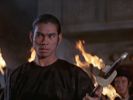
Before the film's plot can continue the red blooded, masculine, and decidedly heterosexual credentials of the two central characters has to be established. Theirs is a bond that is based on duty and on intellectual and political alignment. They both want modernisation and political reform in China.
At the end of a period of Chinese history known as The Hundred Days' Reform, the Empress Dowager Cixi, the real power behind the throne, imprisons the Guangxu Emperor, a reformer, and declares other leading reformers as enemies of the state. Tan Sitong and Wang Wu smuggle two of the leading reformers, Kang Youwei (Ku Weng-chung) and Liang Qichao (Dean Shek Tin) to safety. Tan Sitong refuses to flee. He is captured and sentenced to death. Wang Wu, on hearing this, decides to mount a rescue attempt, which is ultimately doomed. The doomed heroic struggle is very much a part of kung fu movies of the period.
The frequency of the action sequences in Iron Bodyguard is turned down somewhat from what you would expect from its Hong Kong contemporaries. That isn't to say that they are not prevalent, just that there is space left in the movie for other things, characters and acting. The two leads, Chen Kuan-tai and Yueh Hua aren't the strongest actors but they can carry their parts and make the audience care about their fate. What they are is incredibly talented martial artists who can fight in a charismatic way. In that way they are more like dancers than conventional actors. Fewer fights means the supporting actors are able to give the film a more complete feel. Chiang Nan, as Commander Wen Ping, comes close to stealing the scenes that he is in.
Of the two directors, Cheh Chang and Pao Hsueh-Li Pao, Pao is overall the most accomplished. Chang is the master of the fight scene and the action sequence, but beyond that his skills were somewhat lacking. Pao on the other hand can do the things that Chang can't. His grasp of character and cinematography fills in the holes. One of the things that is done in Iron Bodyguard is to turn the problematic elements of Chang's style into visual features, fan service. His use of fast pans, tilts, pushes and pulls, which works so well when filming martial arts, is not suited to other forms. The mistakes, such as the off kilter zoom followed by a correcting pan, become stylistic elements, and ultimately enter cinematic language.
For a western audience the plot of Iron Bodyguard may seem a little confusing. It is rare that UK schools teach anything about the egregious way in which we behaved towards less militarised nations. I heard no mention of the Opium Wars, the Century Of Humiliation, or the Boxer Rebellions. Someone who grows up in China will know all about occupation by foreign powers and the horrors visited on the civilian population. What happened during and after The Hundred Days' Reform and the prominent participants in the movement are well known. Wang Wu and Tan Sitong are popular heroes to both democrats and communists, pro-democracy campaigners who wanted China to become a constitutional monarchy. This may seem a little strange, but that's the Maoist dialectic for you. A Chinese viewer knows the quotes, the history, and the liberties that Chang takes with it. The ending echoes a line unspoken in the film:
“I laugh with my sword held high toward the sky. I offer my life to the mountains and rivers.” - Tan Sitong
Reviewed on: 12 Nov 2025


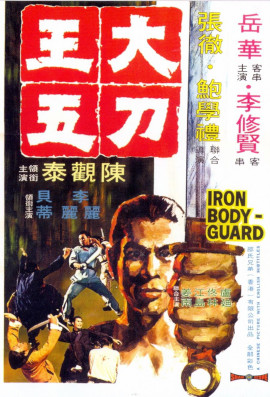
Director: Chang Cheh, Pao Hsueh-li
Writer: Ni Kuang
Starring: Chen Kuan-tai, Yueh Hua, Lily Li, Betty Pei Ti, Danny Lee, Ti Lu, Tao Chiang, Chiang Nan
Year: 1873
Runtime: 94 minutes
Country: Hong Kong
Festivals:
Search database:
